 EN
EN


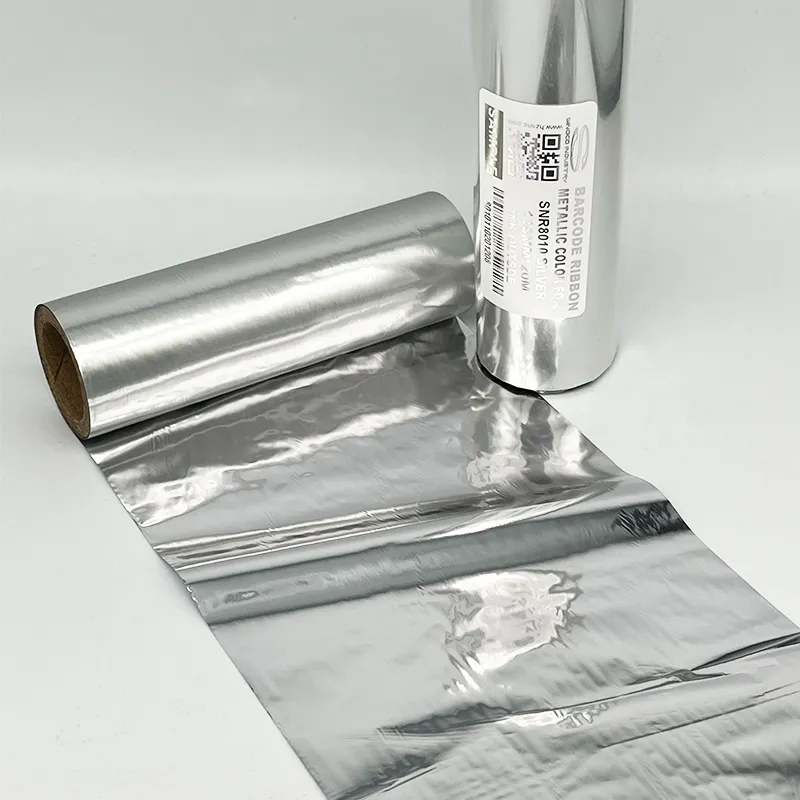
Importance of Ribbon Core Compatibility with Printers
Why Ribbon Core Specifications Matter
Thermal transfer printing depends on precise synchronization between the printer's ribbon drive and the ribbon itself. A barcode ribbon wholesale buyer focused solely on width and length risks stocking inventory that jams, tracks poorly, or degrades print head life — all because the ribbon core does not fit the printer. Core compatibility is the most overlooked specification in ribbon procurement.
Core Diameter and Printer Drive Tension
Thermal transfer printers use either a 0.5-inch or 1-inch core diameter, and they are not interchangeable. A 0.5-inch core on a 1-inch spindle adapter may spin loosely, creating back-tension inconsistencies that produce wrinkled ribbon and misaligned prints. A 1-inch core forced onto a 0.5-inch spindle jams or unwinds unevenly.
The take-up spindle presents the same problem. Printers designed for 0.5-inch take-up cores require the spent ribbon to wind tightly. Mismatched cores wobble, contact the housing, and may snap during high-speed runs above 6 inches per second. Production environments running 8,000 to 12,000 labels daily cannot tolerate this failure rate.
Core Material and Static Control
Cardboard cores are standard for general-purpose ribbons. Plastic cores are specified for cleanroom environments and high-humidity applications where cardboard particles contaminate the print path. Plastic cores can accumulate static charge during high-speed unwinding, attracting dust that creates print voids. Anti-static additives address this in sensitive environments.
Additional Core Specifications That Affect Print Quality
Notch and Keyway Alignment
Some printers use notched cores — indentations engaging with spindle tabs — to ensure correct orientation. A non-notched core in a notched-core printer shifts laterally during printing, producing barcode skew at label edges that scanning systems reject. The keyway — a slot in one end of the core — serves the same orientation function for larger-format printers. A mismatched keyway prevents full seating, offsetting the entire ribbon track by 1 to 3 millimeters.
Winding Direction
Ribbon winding direction — whether the ink-coated side faces inward or outward — must match the printer's ribbon path. Installing a ribbon with incorrect winding direction prints nothing, as the uncoated backside passes over the print head. This mistake costs production time in misdiagnosed print failures.
A Practical Case: Warehouse Labeling Operation Recovery
A third-party logistics provider operating 24 thermal transfer printers placed an emergency barcode ribbon wholesale order during peak season. Ribbon width and length matched specifications, but the core was 1-inch diameter on printers requiring 0.5-inch cores. Operators attempted makeshift adapters, creating back-tension problems that produced approximately 15 percent label rejection rates at warehouse scanning stations.
The provider corrected the order and sourced correctly-cored ribbon from Hangzhou Sinoco Industry, a barcode ribbon wholesale manufacturer specifying core compatibility by printer model. Print rejection rates returned to baseline 1 to 2 percent within 24 hours. The provider updated procurement specifications to include core diameter and notch type as mandatory ordering parameters.
Procurement Best Practices
Specification Documentation
A procurement specification should include six parameters: ribbon width, ribbon length, core inner diameter, core notch type if applicable, winding direction, and core material. Missing any parameter invites the supplier to substitute incorrectly — often with the supplier's standard configuration rather than the printer's required configuration. Barcode ribbon wholesale orders with complete specifications see significantly lower return rates than orders specifying only width and length.
Printer-Specific Verification
Before placing volume orders, test a sample roll of the specified ribbon configuration on each printer model in the fleet. A ribbon that works perfectly on one printer may fail on another using the same nominal core size but different spindle design. Printers from Zebra, Datamax, TSC, and Sato each have subtle but consequential core engagement differences — a one-millimeter spindle diameter difference translates to loose or tight fit affecting back-tension. Hangzhou Sinoco Industry, a specialized barcode ribbon wholesale manufacturer, provides model-specific compatibility guidance that reduces the need for multi-supplier testing.
Frequently Asked Questions
What is the standard core diameter for thermal transfer ribbons?
The two standard core diameters are 0.5 inches and 1.0 inch. Desktop printers typically use 0.5-inch cores, while industrial printers vary. Always verify the printer specification rather than assuming based on class.
Why does ribbon winding direction matter?
Incorrect winding direction passes the uncoated side over the print head, preventing ink transfer. It can also cause backward winding on the take-up spindle, creating jams and ribbon breakage.
Can notched and non-notched cores be interchanged?
Notched cores are printer-specific. A non-notched core in a notched-core printer will not seat properly and causes lateral ribbon drift. The notch prevents installation errors in low-light warehouse environments.
How does core material affect printing in different environments?
Cardboard cores suit standard warehouses. Plastic cores are preferred in cleanrooms and high-humidity areas. Suppliers like Hangzhou Sinoco Industry offer barcode ribbon wholesale with plastic core options for specialized applications.
What happens if the ribbon core is slightly too large for the spindle?
An oversized core rotates unevenly, creating back-tension variation that wrinkles ribbon and produces misaligned prints. The take-up spindle may fail to grip the core, stopping the print job.
How can procurement teams prevent core compatibility issues?
Include core diameter, notch type, winding direction, and core material in every purchase order. Test sample rolls on all printer models before volume orders. Barcode ribbon wholesale suppliers providing model-specific guidance reduce misorder rates.