 EN
EN

Understanding Thermal Transfer Ribbons and Core Types
What Is a Thermal Transfer Ribbon and How Does It Work?
Thermal transfer ribbons act as the main ink supply for industrial labels, basically printing text, barcodes, and graphics onto various materials using heat. These ribbons are made from polyester base material covered in different types of ink coatings like plain wax, mixed wax-resin blends, or pure resin formulas. When the printer's heating element gets hot enough, the ink layer softens and sticks permanently to whatever surface it touches. What makes this technique so good is how precise and long lasting the results tend to be, which explains why manufacturers rely on it heavily for things like tracking packages during shipping or marking critical components in medical equipment. Most systems can handle print resolutions around 600 dots per inch, meaning those important barcodes stay readable even when exposed to harsh conditions over time or subjected to physical wear and tear.
Wax, Wax-Resin, and Resin Ribbons: A Comparative Overview
Choosing the right ribbon depends on substrate type and environmental demands:
| Ribbon Type | Best For | Durability | Cost Efficiency |
|---|---|---|---|
| Wax | Paper, uncoated labels | Moderate (indoor use) | High |
| Wax-Resin | Semi-synthetic materials | High (moisture resistance) | Moderate |
| Resin | Synthetic polymers (PET, PP) | Extreme (chemical/heat exposure) | Low |
Wax ribbons are cost-effective for short-term logistics labels, while resin formulations are essential in automotive or chemical industries where labels endure solvents and temperatures above 150°C.
The Role of Hot Stamping Foil in Print Quality and Adhesion
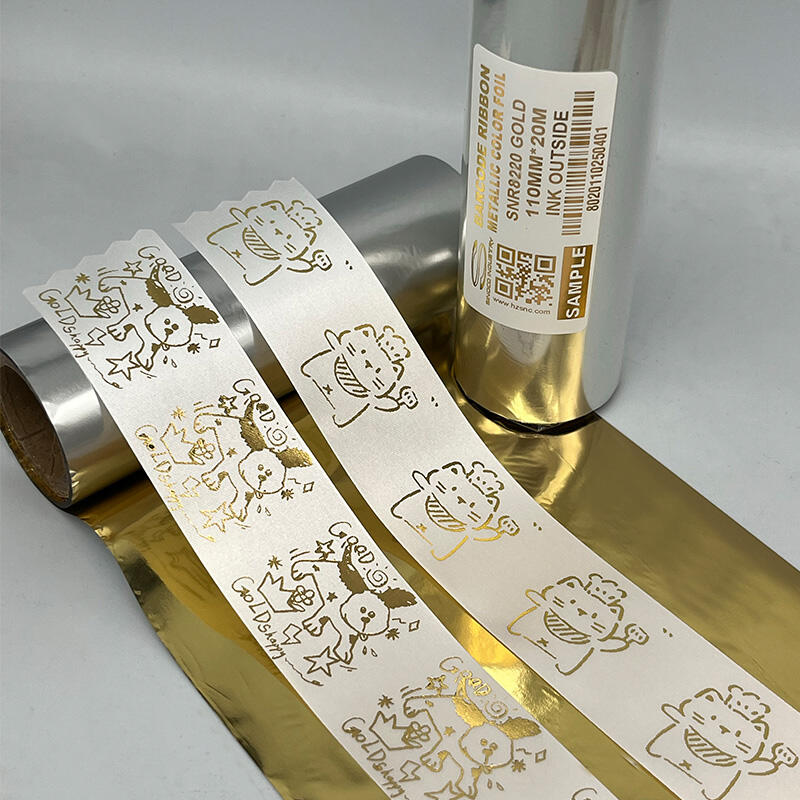
When hot stamping foil is applied, it actually boosts product durability through the application of either a metallic or colored layer that gets released when heated from a carrier film. The bonding works really well on surfaces such as PVC or rough paper types, and tests show around a 40 percent improvement in how resistant these surfaces become to wear and tear versus regular wax based ribbons according to research published by Ponemon back in 2023. Because of this enhanced protection, many manufacturers find hot stamping particularly useful for high end packaging solutions as well as delicate electronics parts where appearance matters most. Choosing the right type of foil becomes critical though since some plastics have lower surface energy levels which can cause problems with sticking properly. Good quality foils will stick firmly even under challenging environmental conditions like high humidity or exposure to oils without coming loose over time.
Matching Ribbon Types to Label Substrates for Optimal Performance
Wax Ribbons with Paper-Based Labels: Cost-Efficiency and Print Clarity
Wax ribbons work really well on plain old uncoated paper, giving clear text and sharp barcodes without breaking the bank. The fact that they melt at lower temperatures means they won't ruin sensitive materials either, which is why many companies use them for things like printing expiration dates directly onto product packaging. According to Packaging Insights from last year, food packagers can actually cut costs by around three to five cents per label when switching from expensive alternatives to these wax-based solutions. That might not seem like much individually, but over time it adds up nicely for operations needing thousands of labels daily for temporary marking needs.
Wax-Resin Ribbons on Coated and Semi-Synthetic Labels: Balanced Durability
For coated paper or semi-synthetic substrates like polypropylene, wax-resin ribbons provide 2–3× greater abrasion resistance than wax. They adhere well to glossy coatings and maintain readability in moderate humidity, suiting pharmaceutical leaflets or outdoor equipment labels.
Resin Ribbons for Synthetic Materials: Maximizing Chemical and Heat Resistance
Resin based ribbons work really well on materials like polyester and polyethylene along with most synthetic surfaces. They can stand up against UV exposure for more than 500 hours and remain stable even when temperatures reach around 150 degrees Celsius which is about 302 Fahrenheit. The way these ribbons stick to surfaces helps them stay put through harsh chemical cleaning processes. This makes them suitable for things like labels that need to survive medical sterilization procedures or parts used in cars that come into contact with various types of oil. Sure, resin ribbons cost about 35 percent extra compared to regular wax resin options. But according to a study from DuraPrint back in 2023, companies save roughly 60 percent on having to replace labels so often in their factories and production lines.
Key Factors Influencing Ribbon and Label Material Compatibility
Surface Energy and Coating Composition of Label Materials
Label adhesion depends on surface energy: polyethylene (31 dynes/cm) often requires corona treatment for proper bonding, while polyester (42+ dynes/cm) readily accepts resin-based ribbons. Coating chemistry also matters—acrylic-coated labels improve smudge resistance by 35% versus uncoated alternatives (Material Science Quarterly, 2023).
Environmental Exposure: Temperature, Humidity, and Chemical Contact
Labels face demanding conditions:
- Heat: Resin ribbons remain legible at 150°C for over 500 hours—four times longer than wax.
- Chemicals: Wax-resin resists mild solvents like isopropyl alcohol but degrades under ketones.
- Humidity: Semi-synthetic labels with resin ribbons retain 98% barcode readability after 30 days in high-humidity chambers (85% RH, 40°C).
Print Longevity, Barcode Readability, and Application Lifespan
With resin ribbons, synthetic labels can last up to 20 years outdoors—critical for aerospace and medical devices. Abrasion-resistant coatings reduce edge wear by 60%, and ANSI/UL 969 compliance ensures reliable scanning at 12 mil resolution, even in low light. In food packaging, resin formulations prevent oil migration, maintaining clarity for 18+ months.
Performance Outcomes: Durability, Clarity, and Cost Across Applications
Smudge Resistance and Print Quality with Wax-Based Hot Stamping Foil
Wax-based hot stamping foil offers affordable smudge resistance for paper labels, ideal for retail or shipping tags. Its low melting point enables sharp print clarity and lower energy use. However, it wears faster under friction and isn’t suited for long-term handling.
Moisture and Light Chemical Resistance Using Wax-Resin Formulations
Wax-resin ribbons balance durability and cost for coated and semi-synthetic substrates. They withstand refrigeration and light cleaners like diluted alcohols. Lab simulations show they cut replacement costs by 15–20% versus resin ribbons in non-industrial settings.
Extreme Condition Performance: Resin Ribbons in Industrial Environments
Resin ribbons thrive in harsh conditions, resisting oils, solvents, and extreme temperatures (-40°C to 150°C). A 2023 materials study found resin-printed synthetic labels retained 98% readability after 12 months in automotive plants—40% better than wax-resin. Despite higher upfront costs, their longevity lowers total ownership in critical sectors like aerospace and pharmaceuticals.
Innovations and Future Trends in Thermal Transfer Ribbon Technology
Eco-Friendly Hot Stamping Foil and Sustainable Ribbon Solutions
Sustainability efforts have led to ribbons and foils made with recycled content and plant-based resins. According to a 2023 Material Innovation Report, these reduce petroleum use by up to 40% while maintaining durability…
Smart Labels and Precision Ribbon-to-Material Matching
IoT integration demands flawless barcode performance. Advances pair resin ribbons with synthetic labels to achieve 99.8% first-read rates in cold chain logistics (-30°C to 60°C). Leading adopters report 30% fewer mis-scans using smart label systems with embedded RFID tags that adjust print temperature based on substrate thickness (10–200 microns).
Predictive Analytics for Optimizing Ribbon Selection
Machine learning models analyze over 15 variables—including surface energy (≈38 dyne/cm for resin) and chemical thresholds—to recommend ribbons with 94% accuracy. A 2024 field study showed these tools reduced label waste by 22% in pharmaceutical serialization by matching wax-resin ribbons to coated polypropylene’s moisture needs.
Frequently Asked Questions
What is the main use of thermal transfer ribbons?
Thermal transfer ribbons are mainly used as ink supplies for industrial labels, printing text, barcodes, and graphics onto various materials using heat.
How do you choose between wax, wax-resin, and resin ribbons?
The choice depends on the substrate type and environmental demands. Wax is suitable for paper and uncoated labels, wax-resin offers moisture resistance and is best for semi-synthetic materials, while resin provides extreme durability for synthetic polymers like PET and PP.
What are the benefits of using hot stamping foil?
Hot stamping foil enhances product durability and adhesion, offering around a 40% improvement in surface resistance to wear and tear compared to regular wax-based ribbons.
Which situations would benefit from resin ribbons?
Resin ribbons are ideal for environments with extreme conditions, such as high temperatures, oils, and solvents. They are widely used in the automotive and pharmaceutical sectors where label durability is critical.
What sustainable options are available in ribbon technology?
Eco-friendly ribbons and foils made with recycled content or plant-based resins are available, reducing petroleum use while maintaining durability.
Table of Contents
- Understanding Thermal Transfer Ribbons and Core Types
- Matching Ribbon Types to Label Substrates for Optimal Performance
- Key Factors Influencing Ribbon and Label Material Compatibility
- Performance Outcomes: Durability, Clarity, and Cost Across Applications
- Innovations and Future Trends in Thermal Transfer Ribbon Technology
- Frequently Asked Questions