 EN
EN

Understanding the Real Risk When Outdoor Labels Fail
Outdoor labeling is one of the most unforgiving challenges in industrial identification. Barcodes, safety warnings, and tracking numbers printed on labels affixed to chemical drums, shipping containers, utility infrastructure, and construction materials are expected to remain legible under conditions that would destroy ordinary print within weeks. UV radiation, freeze-thaw cycling, heavy rain, road grime, and mechanical abrasion attack label surfaces around the clock. When degradation happens, the fallout reaches far beyond a smudged barcode. A custom made ribbon engineered for resin-based thermal transfer printing provides the strongest defense against these failures — yet many supply chains still default to general-purpose consumables never designed for outdoor exposure.
What Causes Outdoor Label Degradation
Label failure outdoors rarely stems from a single factor. Ultraviolet light breaks down the polymer chains in printed characters, causing fading that accelerates dramatically in regions with high sun exposure. Moisture intrusion lifts label edges and weakens the bond between ink and facestock. Temperature swings — from summer heat above 40°C to winter lows below -20°C — create repeated expansion and contraction cycles that crack printed surfaces. Abrasive contact with adjacent drums, pallet edges, and handling equipment physically erases critical data. A custom made ribbon formulated with UV-stabilized resin chemistry addresses these combined threats at the molecular level, bonding permanently to the substrate rather than sitting on top of it as a superficial layer.
The Operational Cost of Illegible Labels
When an outdoor label becomes unreadable, the consequences compound quickly. A shipment of industrial chemicals arriving with faded drum identifiers triggers re-labeling labor, quarantine delays, and potential rejection by the receiving facility. In regulated sectors like hazardous materials transport, illegible labels constitute a compliance violation under frameworks enforced by agencies such as OSHA. Misidentified containers create safety risks for warehouse and logistics personnel. At the supply-chain level, barcode scan failures disrupt inventory accuracy, delay order fulfillment, and erode downstream customer confidence. The per-label cost difference between a basic wax ribbon and a purpose-built resin ribbon designed for outdoor use becomes negligible when measured against the operational cost of a single failed shipment.
Why Standard Printing Consumables Fall Short Outdoors
Direct thermal printing — where heat-sensitive paper darkens without any ribbon — offers zero outdoor durability. The image fades in sunlight within days. Wax thermal transfer ribbons produce a print that sits on the label surface and rubs off under moderate friction or solvent contact. Wax-resin blends improve smudge resistance somewhat but still degrade under sustained UV exposure and chemical attack. Only a full resin ribbon — especially a resin ribbon matched to a specific label substrate and environmental profile — delivers the cross-linked molecular bond required for years of outdoor legibility.
How Resin Ribbon Technology Ensures Long-Term Outdoor Durability
The Chemical Composition That Powers Resin Ribbon Performance
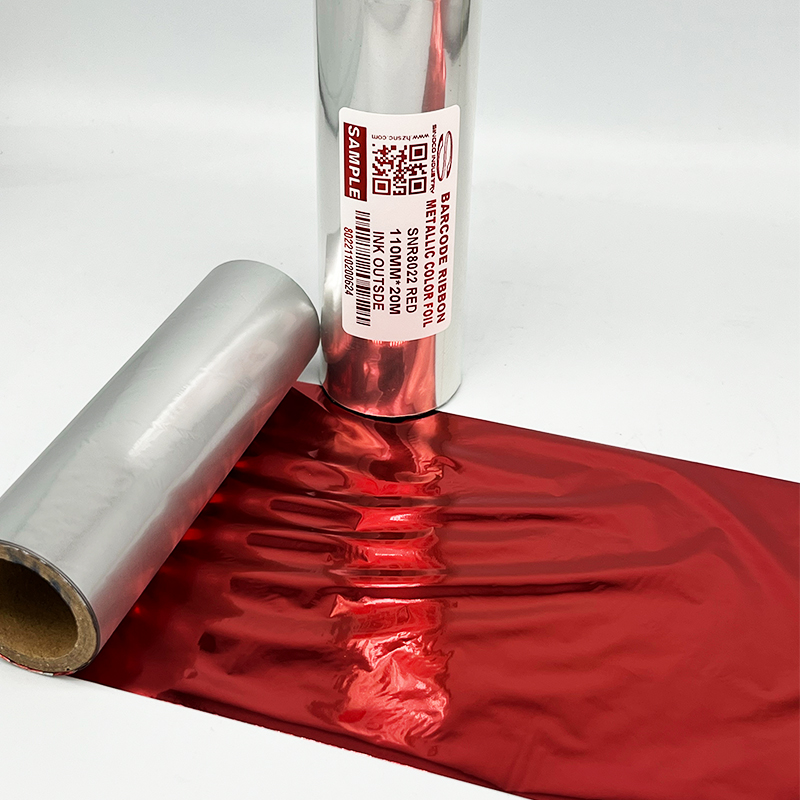
A resin ribbon consists of a polyester (PET) film base coated with a layer of synthetic resin that melts and permanently fuses to the label surface during the thermal transfer printing process. The functional difference lies in the coating formulation. High-performance resin coatings blend hydrocarbon resins, acrylic polymers, and curing agents to create a cross-linked structure upon application. This cross-linking process produces three defining characteristics: chemical resistance sufficient to withstand solvent, fuel, and cleaning agent contact; thermal stability that maintains print integrity across a wide temperature range; and abrasion resistance that survives friction from handling, stacking, and transport.
When an industrial operation specifies a dedicated resin ribbon, the coating formulation can be adjusted at the manufacturing stage to match the exact substrate — whether polyester, polypropylene, vinyl, or polyimide. This substrate-specific bonding eliminates the trial-and-error cycle that occurs when procurement teams attempt to pair off-the-shelf ribbons with unfamiliar label materials.
Thermal Transfer vs. Direct Thermal — Why the Difference Is Critical
Thermal transfer printing uses a heated print head to melt the ribbon coating onto the label substrate. The result is a fused image that becomes part of the label itself. Direct thermal printing, by contrast, creates an image through a chemical reaction within the label paper — no ribbon involved. That image is thermally unstable and begins degrading under heat, light, or friction immediately after printing.
For any application where the label must survive outdoors beyond a few days, the choice between these two technologies is not a matter of preference. Direct thermal labels simply cannot meet the durability requirement. A properly specified resin ribbon, paired with a compatible synthetic label substrate, produces print that withstands conditions direct thermal labels could never survive.
Industry Standards That Validate Resin Ribbon Reliability
Several international standards provide measurable benchmarks for outdoor label performance. ISO 15415 defines barcode print quality parameters including contrast, modulation, and defects — all of which deteriorate rapidly outdoors without resin-based printing. ANSI MH10 offers testing protocols for label durability under mechanical stress. ASTM G154 and G155 specify accelerated weathering test methods using fluorescent UV and xenon arc exposure that simulate months or years of outdoor conditions in days.
For chemical and industrial environments, OSHA's Hazard Communication Standard (29 CFR 1910.1200) explicitly requires that container labels remain legible throughout the product lifecycle. A ribbon matched to the substrate and validated against these benchmarks provides documented compliance evidence rather than relying on assumptions about label longevity.
A Real-World Case: Outdoor Labeling That Survives Extreme Conditions
Application Scenario — Chemical Drum Identification in Open-Yard Storage
A North American chemical distributor operating multiple outdoor storage yards across the Midwest faced a persistent labeling problem. Their 55-gallon drums of industrial solvents and cleaning agents — stored in open-air racks exposed to summer temperatures above 38°C and winter lows reaching -30°C — were experiencing label failure rates approaching 15% within a six-month window. Faded barcode labels were causing picking errors at the yard, shipment delays at the dock, and complaints from downstream manufacturing customers who depended on accurate drum-level identification for their own inventory systems.
The existing labeling setup used a standard wax-resin ribbon on general-purpose paper labels — a combination that worked adequately indoors but collapsed under outdoor conditions. Moisture penetration caused label peeling. UV exposure turned barcodes into unreadable gray streaks. The maintenance team was spending increasing hours on re-labeling, and the compliance risk associated with illegible hazard communication labels had become a documented concern in quarterly safety audits.
What the Data Showed After Switching to Resin
The distributor tested several ribbon-substrate combinations before settling on a custom made ribbon formulated with high-density, UV-stabilized resin specifically for polypropylene labels. The ribbon was manufactured to the exact width specification matching their fleet of industrial thermal transfer printers, eliminating material waste from trimming and reducing roll-change frequency.
Over a 12-month evaluation period that spanned all four seasons, label failure rates dropped below 2%. Barcode first-pass scan rates improved to 99.7%. Customer-reported issues related to illegible drum labels fell to zero across the monitored period. The re-labeling labor that had consumed approximately 120 staff-hours per quarter was virtually eliminated. Procurement analysis showed that while the per-unit cost of the custom made ribbon was higher than the previous wax-resin alternative, total labeling program costs decreased by roughly 22% when factoring in labor, waste, re-labeling materials, and compliance-related administrative overhead.
How to Select the Right Resin Ribbon for Outdoor Labeling
Matching Ribbon, Substrate, and Printer
Selecting a resin ribbon for outdoor use requires evaluating three interconnected variables. Neglecting any one of them leads to suboptimal performance regardless of ribbon quality.
Substrate material. Polyester and polypropylene labels pair best with full resin ribbons because the resin coating can chemically bond with synthetic facestocks. Paper labels — even coated ones — provide a weaker foundation for outdoor resin printing. A custom made ribbon allows the procurement team to specify a ribbon-substrate combination that has been validated together at the manufacturing level, removing the guesswork from cross-supplier compatibility.
Printer compatibility. Thermal transfer printers vary widely in print-head type — flat-head, near-edge, and corner-edge configurations operate at different speed and energy profiles. Each requires a ribbon with matching release characteristics. Ordering a custom made ribbon at the precise width and length for a given printer model eliminates the performance compromises that off-the-shelf generic rolls impose.
Environmental exposure profile. Labels facing prolonged UV exposure need ribbons with UV-stabilized resin chemistry. Labels in contact with oils, fuels, ketones, or chlorinated solvents need chemical-resistant formulations. Labels subjected to heavy abrasion — such as those on coiled steel, lumber bundles, or recycled containers — need harder resin coatings with higher rub resistance. Matching the ribbon chemistry to the specific exposure profile is what separates a durable outdoor label from one that fails prematurely.
Storage and Handling Practices That Extend Ribbon Performance
Even a premium resin ribbon performs below its potential if stored or handled improperly. Ribbon rolls should be kept in their original vapor-barrier packaging until use and stored at temperatures between 5°C and 35°C with relative humidity below 65%. Direct sunlight on stored ribbon stock can pre-degrade the resin coating before the first print. Print-head cleaning schedules should follow manufacturer recommendations — residue buildup on the print head creates uneven heat transfer that compromises print quality regardless of ribbon quality. Storing ribbons away from chemical fumes and solvent vapors prevents contamination of the coating chemistry during shelf life. A ribbon roll that arrives in factory-sealed packaging sized precisely for the application reduces handling damage and minimizes the number of partial rolls exposed to ambient conditions between print runs.
Frequently Asked Questions
What makes a resin ribbon different from a wax ribbon?
A resin ribbon uses a synthetic polymer coating that fuses permanently to the label substrate during thermal transfer printing, creating a chemical bond. Wax ribbons deposit a wax-based layer that sits on the label surface and rubs off easily. Resin prints resist chemicals, abrasion, and UV exposure. Wax prints do not.
How long do resin ribbon-printed labels last outdoors?
With proper substrate pairing, resin-printed labels can remain legible outdoors for two to five years or longer. The actual lifespan depends on UV exposure intensity, temperature extremes, chemical contact, and physical abrasion. Accelerated weathering tests following ASTM G154 or G155 protocols provide projectable durability estimates for specific ribbon-substrate combinations.
Can a custom made ribbon work with any label printer?
A custom made ribbon can be manufactured to match the specifications of most industrial thermal transfer printers, including models from Zebra, SATO, TSC, Datamax, and others. The critical parameters are ribbon width, length per roll, coating formulation, and release characteristics matched to the printer's print-head technology.
Why do outdoor labels printed with wax-resin ribbons still fade?
Wax-resin hybrid ribbons contain only a partial percentage of resin — typically 30% to 60% — blended with wax carriers. While more durable than pure wax, the wax component still degrades under sustained UV exposure and softens at elevated temperatures. Full resin ribbons eliminate the wax entirely, replacing it with cross-linked polymers that do not break down under the same conditions.
Which label materials pair best with resin ribbons for outdoor use?
Polyester (PET) and polypropylene (PP) labels provide the strongest foundation for outdoor resin printing. Polyester offers superior chemical and temperature resistance. Polypropylene provides a cost-effective option for moderate outdoor conditions. Vinyl labels also pair well with resin ribbons for applications requiring flexibility and conformability on curved surfaces.
Do resin ribbons require special printer settings?
Resin ribbons typically require higher print-head energy (heat) settings than wax or wax-resin ribbons because the resin coating melts at a higher temperature. Print speed may need to be reduced to ensure complete resin transfer. Most industrial thermal transfer printers include configurable heat and speed profiles that accommodate resin ribbons without hardware modification.
What is the shelf life of an unused resin ribbon?
Unopened resin ribbons stored under recommended conditions — 5°C to 35°C, below 65% relative humidity, away from direct sunlight and chemical vapors — typically carry a shelf life of 12 to 24 months from the date of manufacture. Once a roll is opened, it should be used within six months for optimal print quality.
Is a custom made ribbon more cost-effective than standard off-the-shelf options?
When total labeling program costs are calculated — including re-labeling labor, label waste, printer downtime, compliance risk, and customer returns — a custom made ribbon often proves more cost-effective than standard alternatives. The higher per-unit ribbon cost is typically offset by reduced failure rates, fewer changeovers, and the elimination of secondary protective measures like label overlaminates.
Choosing a Reliable Ribbon Manufacturing Partner
Outdoor label durability depends as much on the manufacturing capability behind the ribbon as on the ribbon chemistry itself. A production partner with ISO-certified quality management systems, in-house coating formulation expertise, and multi-region logistics capability provides the consistency that high-stakes labeling programs require.
SINOCO operates an ISO-certified thermal transfer ribbon manufacturing facility with more than a decade of coating formulation experience across wax, wax-resin, and full resin product lines. The company's R&D capability supports substrate-specific custom formulation — matching ribbon chemistry to polyester, polypropylene, vinyl, and specialty synthetic label materials for applications ranging from outdoor chemical drum identification to cold-chain logistics and automotive parts tracking. Production flexibility enables custom made ribbon specifications including non-standard widths, extended roll lengths, and application-optimized coating formulations without the minimum order constraints that make custom orders impractical with larger commodity suppliers.
For procurement teams evaluating outdoor labeling program reliability, engaging a manufacturer with demonstrated formulation capability, documented quality control procedures, and responsive technical support builds the supply-chain resilience that off-the-shelf ribbon purchasing cannot provide.
Table of Contents
- Understanding the Real Risk When Outdoor Labels Fail
- How Resin Ribbon Technology Ensures Long-Term Outdoor Durability
- A Real-World Case: Outdoor Labeling That Survives Extreme Conditions
- How to Select the Right Resin Ribbon for Outdoor Labeling
-
Frequently Asked Questions
- What makes a resin ribbon different from a wax ribbon?
- How long do resin ribbon-printed labels last outdoors?
- Can a custom made ribbon work with any label printer?
- Why do outdoor labels printed with wax-resin ribbons still fade?
- Which label materials pair best with resin ribbons for outdoor use?
- Do resin ribbons require special printer settings?
- What is the shelf life of an unused resin ribbon?
- Is a custom made ribbon more cost-effective than standard off-the-shelf options?
- Choosing a Reliable Ribbon Manufacturing Partner